A 40 mm journal comes off the grinder at 39.982 mm and the operator calls it good, because it is only 0.018 mm below nominal. If the drawing says h6, that part is not good. At 40 mm, h6 permits a lower deviation of 16 microns, so the smallest acceptable size is 39.984 mm and the journal goes back for rework.
Here is the short version before the detail. h6 is a shaft tolerance from ISO 286 that sits at and below nominal size: zero upper deviation, minus the IT6 width on the lower side. It belongs on bearing seats where the ring must slide, or where the load direction is stationary relative to that ring. It is also the callout most often confused with H6, which is a housing bore tolerance with the band above nominal size.
Reading h6: Letters, Grades, and Limits
An h6 callout carries two separate facts. The letter fixes the position of the tolerance zone, and lowercase letters always describe external features such as journals and studs, while uppercase letters describe housing bores and other internal features. The number fixes the width of the zone: grade 6, or IT6.
Because the fundamental deviation for h is zero, the upper deviation of an h6 shaft is exactly nominal size, and every permitted diameter is at or below it. That is why the callout is so common on bearing seats. A journal made to h6 can never be oversize, so it never blocks assembly, and it enters an H6 or H7 bore without force.
Band width grows with diameter, so h6 is not one single number. It is 8 microns on a 4 mm shaft and 22 microns on a 100 mm shaft. The table below lists the limits most bearing seats fall into.
Table 1. h6 limits for common shaft diameters. The upper deviation is zero and the lower deviation equals the IT6 band width, so the permitted zone always lies below nominal size.
| Nominal diameter (mm) |
IT6 width (micron) |
h6 upper deviation (micron) |
h6 lower deviation (micron) |
| Up to 3 |
6 |
0 |
-6 |
| Over 3 to 6 |
8 |
0 |
-8 |
| Over 6 to 10 |
9 |
0 |
-9 |
| Over 10 to 18 |
11 |
0 |
-11 |
| Over 18 to 30 |
13 |
0 |
-13 |
| Over 30 to 50 |
16 |
0 |
-16 |
| Over 50 to 80 |
19 |
0 |
-19 |
| Over 80 to 120 |
22 |
0 |
-22 |
H6 is the mirror image: lower deviation zero, upper deviation plus IT6. A drawing that swaps the two cases sends the workshop a very different job. Cost matters as well, since turning usually lands in the IT8 to IT11 range, while h6 normally needs grinding or a carefully controlled finishing pass.
Where an h6 Seat Belongs in a Bearing Arrangement
Floating bearings and sliding seats
In a two bearing shaft, one bearing is fixed in both axial directions and the other floats. Without a free path to move, thermal growth turns into axial load and shortens bearing life. The usual solution is a sliding seat: an h6 journal under the floating inner ring, or an H6 or H7 bore around the floating outer ring.
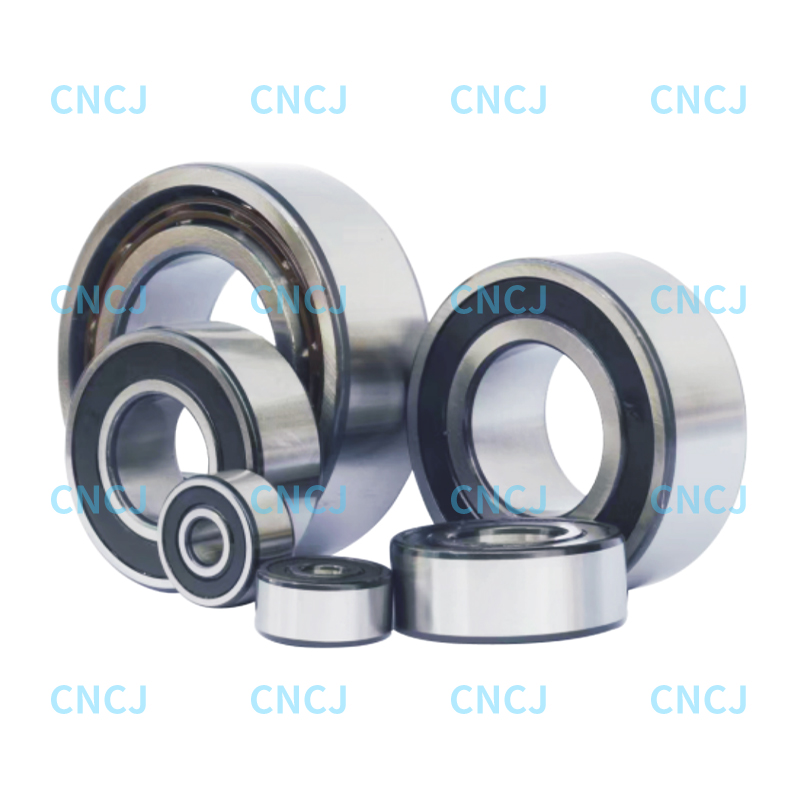
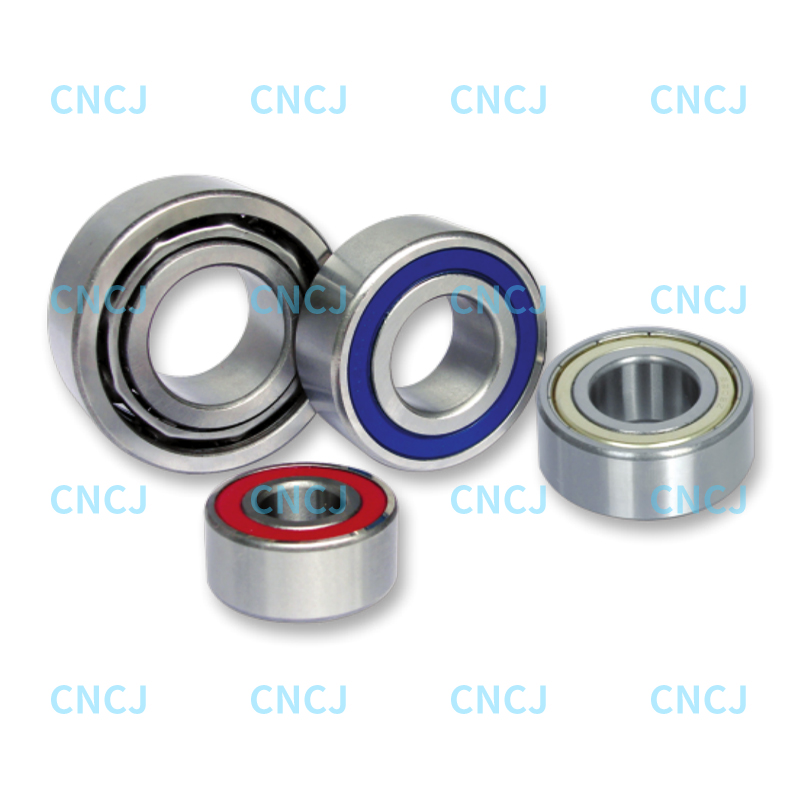
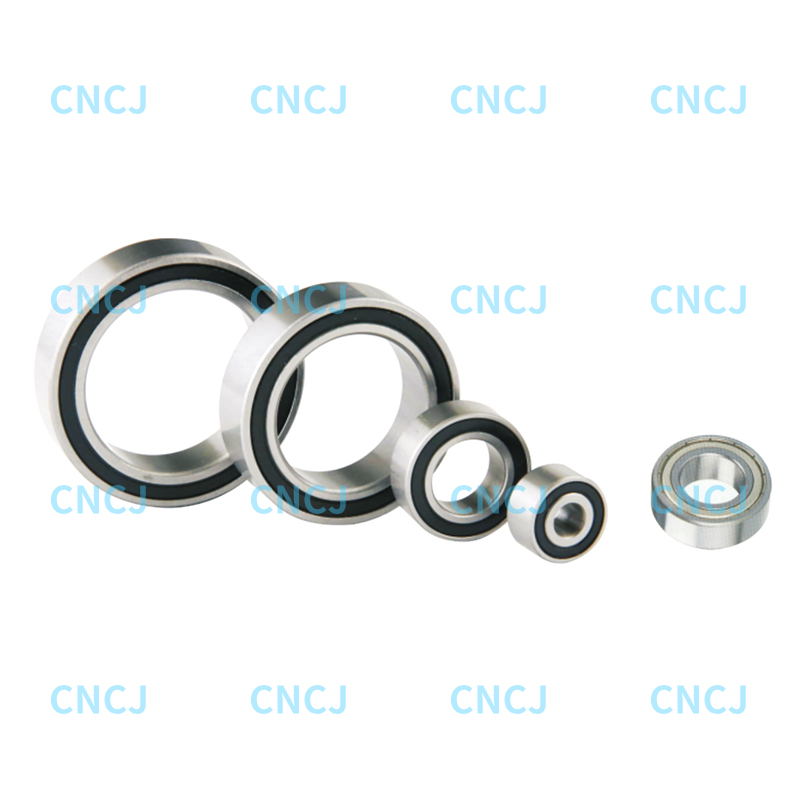
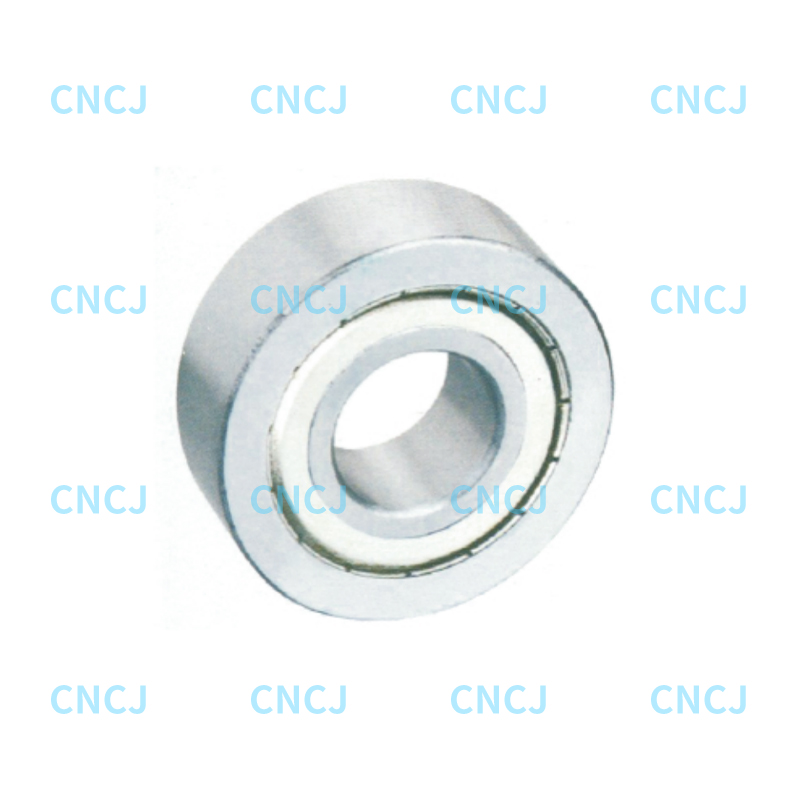
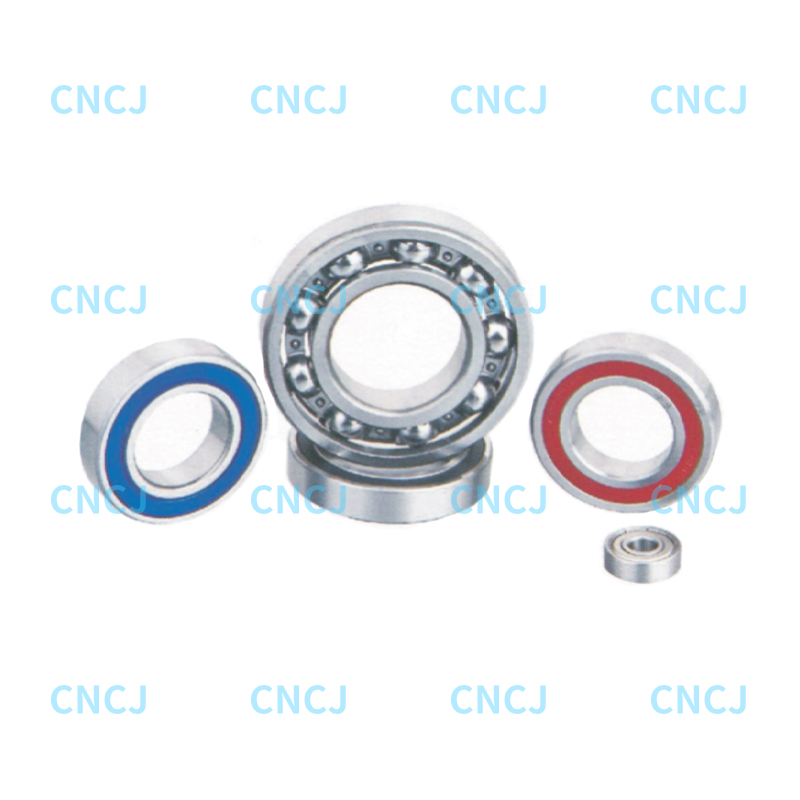
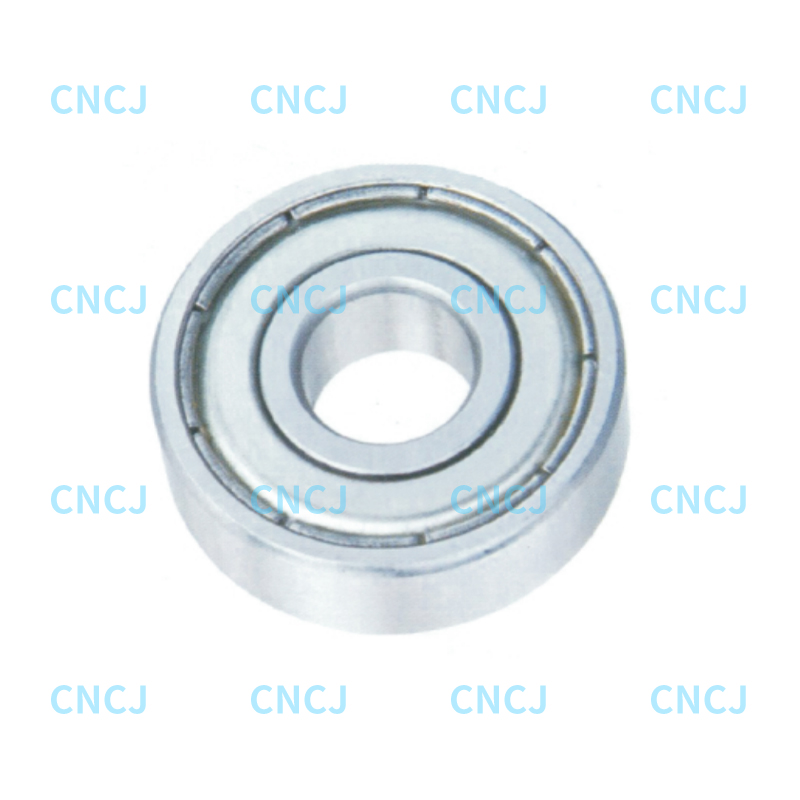
Use g6 instead of h6 when the shaft is long, the temperature swing is wide, or the housing expands more than steel. The extra clearance costs little in radial accuracy and removes the risk of the floating bearing acting as a locating bearing by accident. Deep groove ball bearings are the usual component on the floating side of a shaft, and our range covers the small and medium sizes involved.
 Deep Groove Ball BearingsRecommended productsView Product →
H6 on the housing side
A bore made to H6 holds the outer ring more tightly than H7 while still allowing axial movement, which is why it appears in machine tool housings and split housings that are clamped around the ring. The rule is simple: if the load rotates relative to the outer ring, the housing must grip with an interference such as M7, N7 or P7; if the load direction is stationary relative to the ring, H7 or H6 is correct and easier to assemble.
Matching Fits to Load Conditions
Fit selection comes down to one question. Does the load rotate relative to the ring in question? If it does, that ring needs enough interference to stop it creeping around its seat. If it does not, a light fit is correct and usually better, because it preserves internal clearance and simplifies assembly.
Table 2. General seat recommendations by load condition. Final values depend on load magnitude, speed, temperature and the tolerance class of the bearing itself.
| Load condition |
Ring that needs interference |
Shaft seat |
Housing seat |
| Load rotates relative to inner ring |
Inner ring |
j6 or k6, m6 for shock |
H7 or H6 |
| Load rotates relative to outer ring |
Outer ring |
h6 or g6 |
M7, N7 or P7 |
| Load rotates relative to both rings |
Both |
k6 |
M7 or N7 |
| Floating seat that must slide axially |
None in the sliding direction |
h6 or g6 |
H7 or H6 |
The bearing is half of the calculation. A normal class bearing with a 40 mm bore usually has a bore deviation between zero and about minus 12 microns, so an h6 shaft can leave a small clearance in the worst case. That is fine on a floating seat and unacceptable under a rotating load, where it allows creep and fretting on the journal.
Interference also consumes internal clearance. A useful estimate is that a solid steel shaft removes roughly 70 percent of the interference value from the radial internal clearance of the bearing, and less when the shaft is hollow. Fits and preload therefore belong in the same calculation, and our notes on selecting preload for 52 and 53 series bearings cover how the two interact.
Double row angular contact ball bearings in the 52 and 53 series work on locating seats under combined radial and axial load, and their internal clearance is especially sensitive to a seat that is too tight.
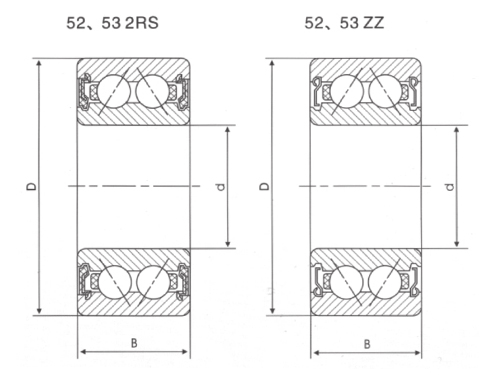 52, 53 Series Double Row Angular Contact Ball Bearings52, 53 Series Double Row Angular Contact Ball Bearings Princinal Dimensions (mm) Bearing Designations Basic Ratings Maxronoutspeed Mass(kg) d D B r P.NO. Shielded Seal...View Product →
What Goes Wrong When the h6 Band Is Missed
Both ends of the band cause damage, and they look very different on a repair bench.
Any size above zero deviation is oversize. Press force climbs, the ring bore can yield, and internal clearance disappears. The bearing runs hot, grease life drops, and in severe cases the ring cracks at the bore face or the seal lip is pushed out of position during assembly.
Any size below the lower limit lets the inner ring creep around the shaft. The seat then wears in a pattern that is easy to recognise during inspection:
- Reddish brown oxide dust around the seat and on the shaft shoulder.
- A polished, dark band on the journal where the ring has been moving.
- An inner ring that can be turned by hand on a shaft that should grip it.
- Rising vibration, tonal noise at running speed and a slow upward drift in bearing temperature.
The housing side behaves the same way. An over tight bore distorts the outer ring into an oval and steals clearance, while a loose bore lets the outer ring creep and hammer a cast iron or aluminium housing. Low noise duties make these effects more visible, because a small loss of fit quality appears directly as tonal noise at running speed. Our 32 and 33 series double row angular contact ball bearings are supplied with controlled bore and outside diameter bands for this reason.
 32, 33 Series Double Row Angular Contact Ball Bearings32, 33 Series Double Row Angular Contact Ball Bearings Princinal Dimensions (mm) Bearing Designations Basic Ratings Maxronoutspeed Mass(kg) d D B r P.NO. Shielded Seal...View Product →
Measuring h6 and H6 Without Arguments
A 16 micron band leaves no room for guesswork, so the measuring method matters as much as the machining method.
Instrument and uncertainty
Use an outside micrometer with 1 micron resolution, set with gauge blocks or a certified master before each batch. Keep gauge uncertainty near 10 percent of the tolerance band, which is about 1.6 microns for h6 at 40 mm, and apply a guard band when it is larger, so the risk of accepting an out of tolerance part is not passed to the customer.
Temperature
Tolerance limits apply at 20 degrees Celsius. Steel grows about 11.5 parts per million per degree Celsius, so a 40 mm journal measured at 25 degrees reads roughly 2.3 microns larger than its true size. A warm part can pass an inspection that it would fail once it cools down.
Shape, not only size
Two point measurement misses a three lobed journal, so check two or three axial positions in two directions and measure taper separately. Housing bores need a bore gauge set with a ring, and split housings should be torqued to specification before measuring, because clamping distortion of 10 microns or more is common. Deburr first, since a raised handling edge can add several microns to a reading.
Specifying h6 to a Bearing Supplier
A drawing prevents more arguments than a sentence in an email. State the nominal diameter, the tolerance class, the datum, the surface finish, and whether the seat locates the ring or lets it float. Add the load condition, because the same 40 mm shaft can need k6 in one machine and h6 in another.
Ask the bearing maker for the bore and outside diameter deviation class as well, since normal class, P6 and P5 rings are not interchangeable in a fit calculation. For a first order, request an inspection report with the actual deviations and a sample fit check where the application is sensitive.
Ningbo Wanshun Bearing works from a 26,000 square meter plant in Henghe town, Cixi, the area known as China bearing hometown, with more than 200 employees including 35 technical staff, producing about 6 million double row angular contact ball bearing sets and 35 million deep groove ball bearing sets each year under ISO 9001. Enquiries are handled in English, Chinese, German and Spanish.
One assembly habit is worth repeating. Press interference fits with an arbor press and a ring warmed to 80 or 100 degrees Celsius, not with hammer blows on the outer ring, and recheck the journal after transport, because a seat that measured h6 on the grinder can pick up a burr before it reaches the press.
The practical points that settle most h6 questions:
- h6 is a shaft tolerance with a zero upper deviation and a lower deviation equal to minus IT6 for the size range.
- H6 is its mirror image for housing bores, with the band above nominal size.
- h6 suits floating seats and rings that see a stationary load direction, and it is wrong for a ring that must resist creep.
- Interference removes internal clearance, so fits and preload belong in the same calculation.
- Measure with calibrated instruments at the reference temperature, and confirm the bearing tolerance class before the drawing is released.